Say it out loud. It arrives in ink.
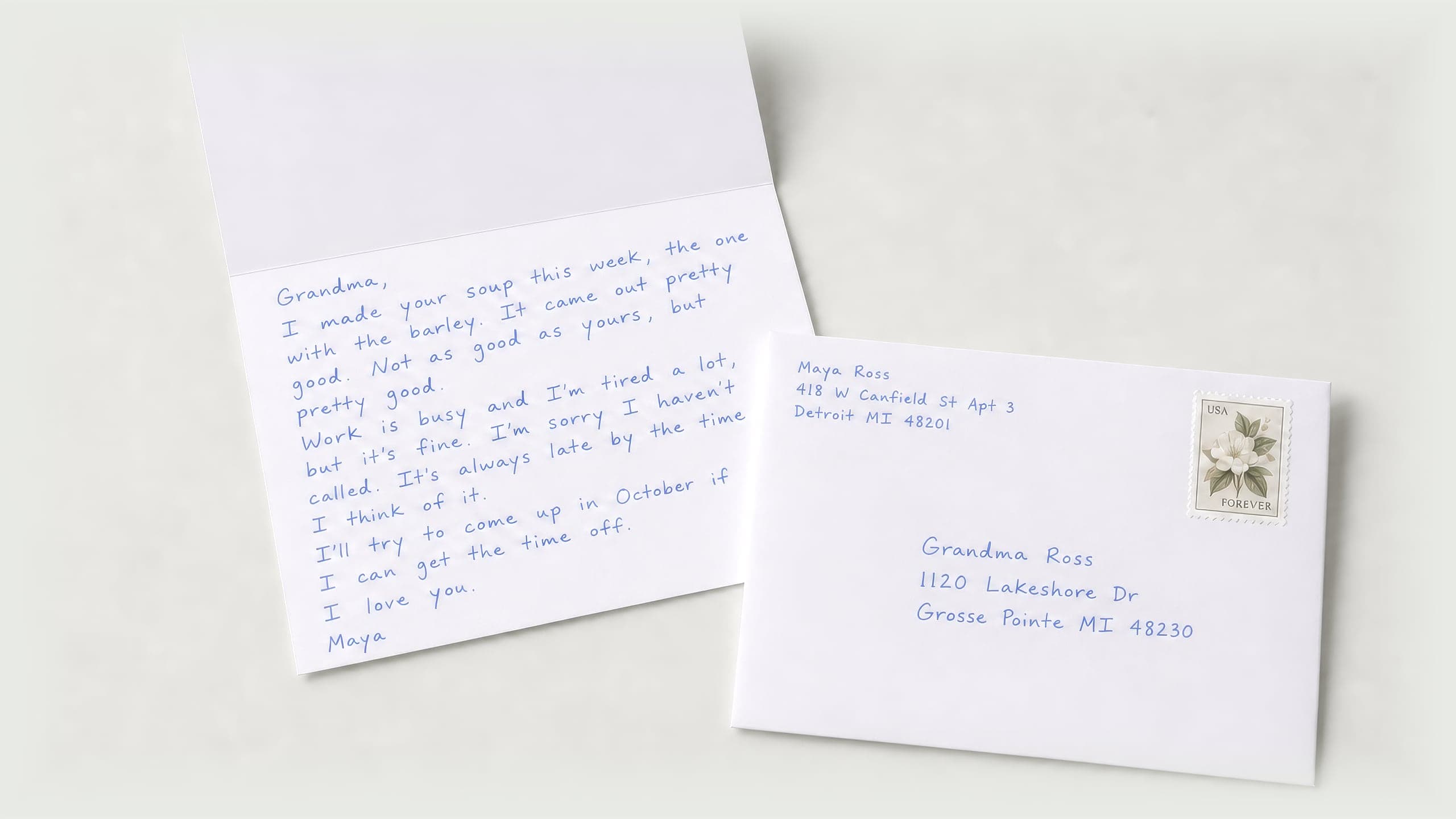
You talk into your phone for two minutes. A few days later, someone you love opens an envelope at the kitchen table and reads a note, handwritten in pen, on paper. You pay for both notes, yours and their reply.
Then four words, and nothing else: written, stamped, on its way, should have arrived.
Talk. It becomes a handwritten note — stamped and mailed.
When you stop talking, the words don’t land in a bubble. They set themselves on the page. Tap a word to fix it. Turn off any change you didn’t mean. Then approve it.
What you see here is the app. Approve it, and it carries on in the app: choosing the handwriting style, postage, your return address.
A machine does the writing. The words are yours.
The pen is a detail of manufacture. You chose to say it, and who to say it to. Nothing on the envelope says where it came from.
Say it the way you’d say it on the phone.
Don’t compose. The ums come out afterward, and you see every change before it goes.
This browser doesn’t offer dictation. Type it, or use a sample.
The part that makes it correspondence
What stops your grandmother writing back is not having a stamp, not knowing your address, and not wanting to ask. You paid for both notes, yours and her reply. A code on the note takes her to a page where she just talks, and it comes back to you in ink.
What comes back is her own words, in pen, on paper. We can’t make that. We can only make it happen.
Neither of you has to meet the other halfway.
Easy. Personal. Forever.
I’d send these.
You have things to say and no time to sit down with a pen. Leave an email and we’ll write when the app is ready.
Have a code, or want to buy your own postage? Open the app.
I’d give these.
Ten notes, $79.99. You give the book to your grandchild. They write from their phone. The notes come to your mailbox. Each one pays for both notes, yours and their reply.
Give ten notes